
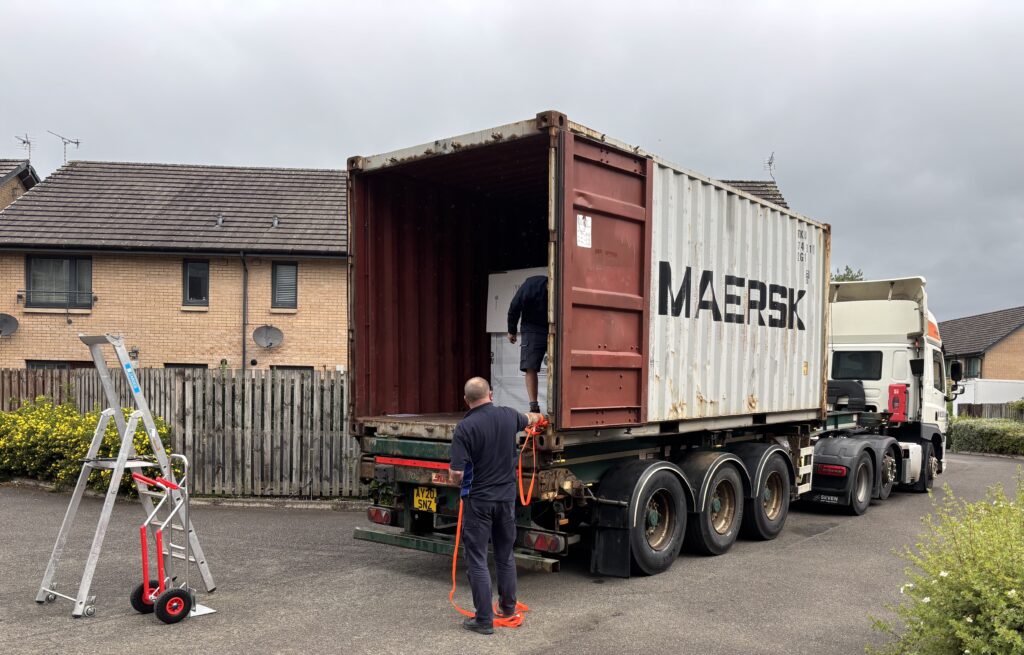
My apologies for the non-appearance of my monthly blog since May. But I have good reasons. Since the last instalment, I graduated with my MFA, sold my place in Halifax, packed and shipped everything off to Scotland, and it’s only in the past month I’ve been able to get back to a sense of normality – and back to writing. Now back to the blog, and I am continuing the four-element structure of: The Book; People and Places; Stories and Scribbles; and Curmudgeon Chronicles.
The Book (Camp 64)
Second Draft
The second draft of the book is progressing well. After the MFA and completion of the “horrible first draft”, I took some time off to absorb feedback from my editor and friends in Halifax. This was very illuminating and resulted in rewriting the beginning. I also thought about the visit I made to Berlin last year and began to dwell more on Karl’s early life and influences. I’ve included a new scene set in 1936, in one of the few remaining gay bars – until the Nazis closed them all. I’m including more flashbacks to enrich the main characters’ backgrounds.
One very useful feedback suggestion was the need for more antagonists and cautioning against characters being “too nice”. This has allowed me to play around with some of the British officers and NCOs. Also, and again being cognizant of the history of POW camps in the UK, I’ve developed the presence and the effect of hard-core Nazis who refused to accept their imprisonment. In one camp in Scotland, this actually led to the murder of a fellow POW.
The first draft – as a deliverable for the MFA program – was restricted to 80,000 words. My original (pre-submittal) draft was around 93,000 words – much cutting was therefore required. Writing the second draft has allowed me to revisit some of these deleted scenes and characters. My goal is for a finished manuscript of around 300 – 350 pages.
Inspirations
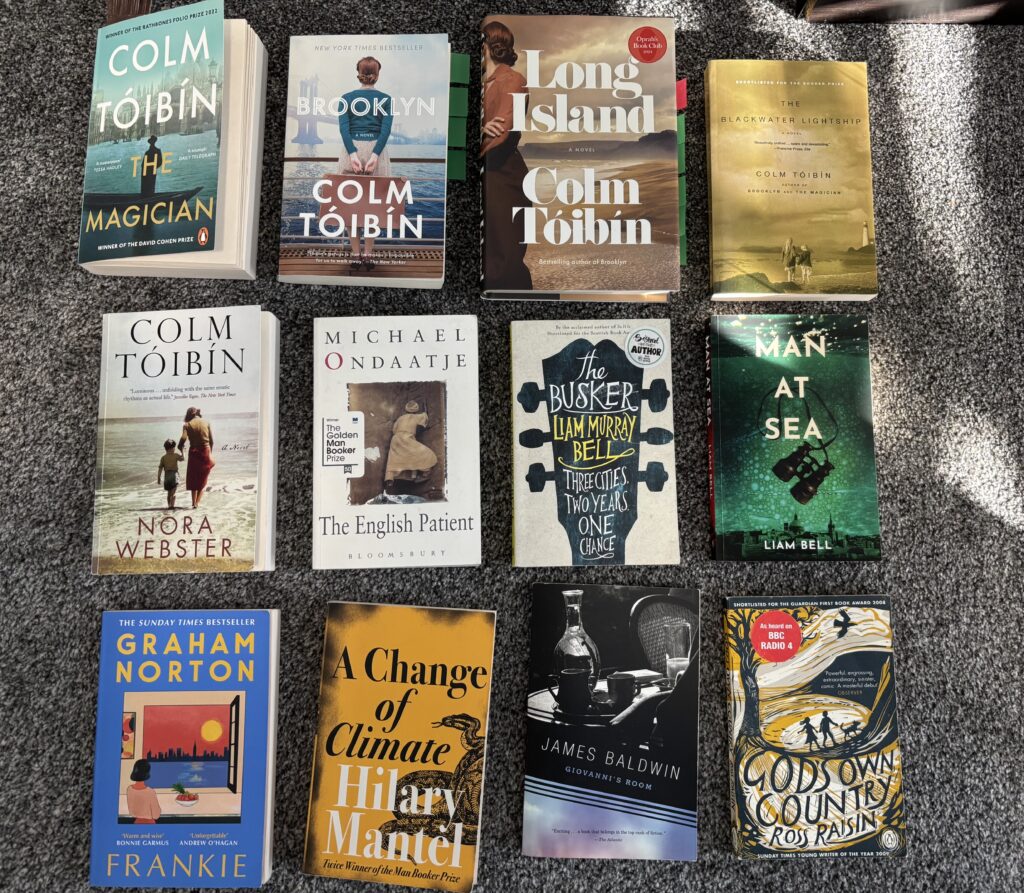
A novelist who has greatly inspired me in this rewriting process is Irish author, Colm Toibin. Not only is he a master of flashbacks, but the way he weaves real-life history and people into his stories is fascinating. One of the most valuable parts of my research was visiting the Dachau concentration camp – an important chapter in the book.
My goal is to complete the second draft by November and then resubmit to my editor for a quick review. Thereafter, I’ll begin the process of finding an agent. Whether I find an agent in Canada or the UK will be an interesting exploration.
People and Places
Moniack Mhor
Before I uprooted myself from Halifax, I wondered how I would acclimatise and settle in Scotland – with particular attention to the writing world. It was with this in mind that I attended a five-day writing course, late July, at Moniack Mhor, near Inverness, in the north of Scotland. I knew little about it, but it has been there for thirty years as Scotland’s Creative Writing Centre.
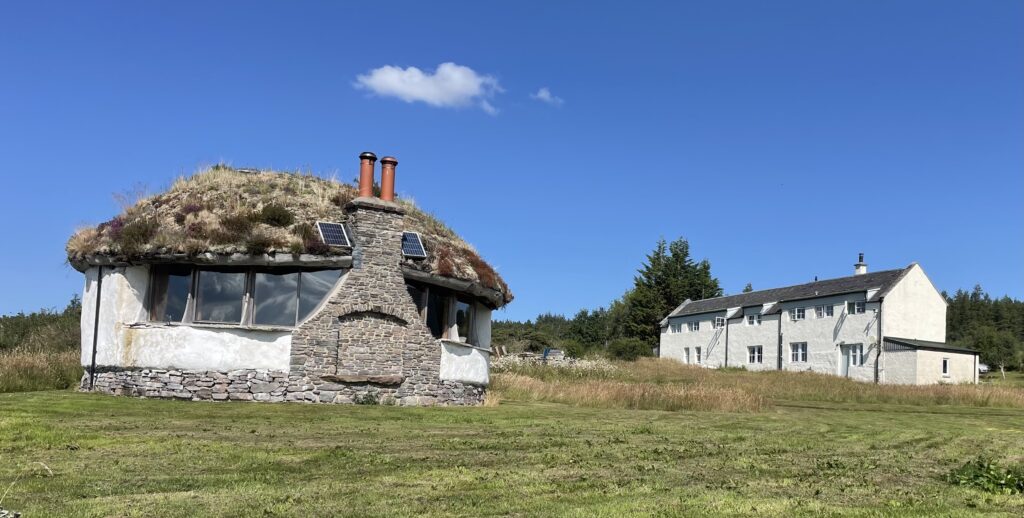
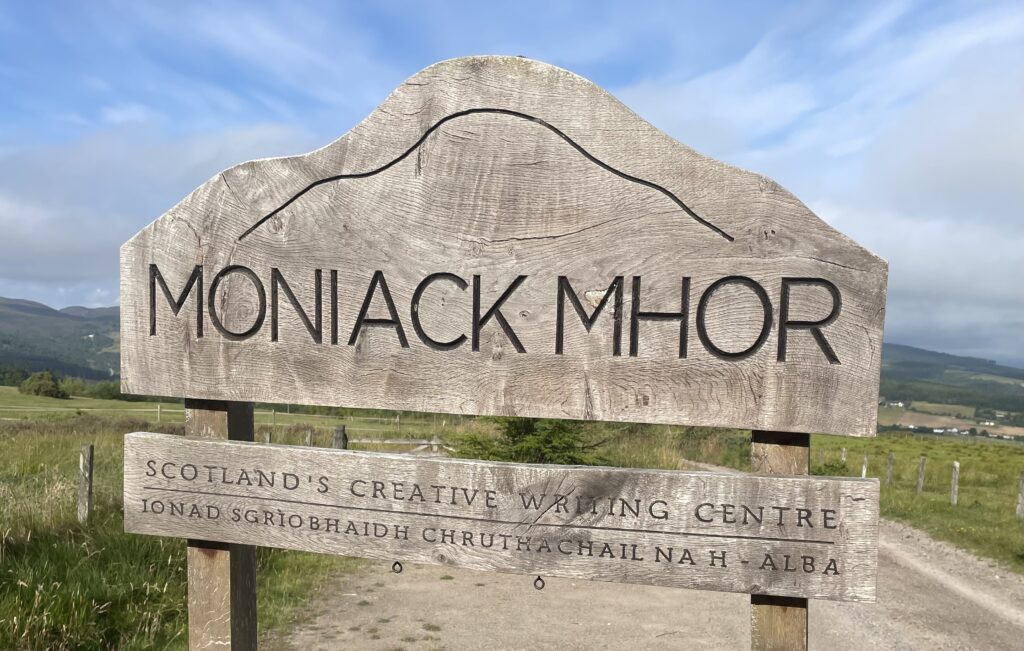
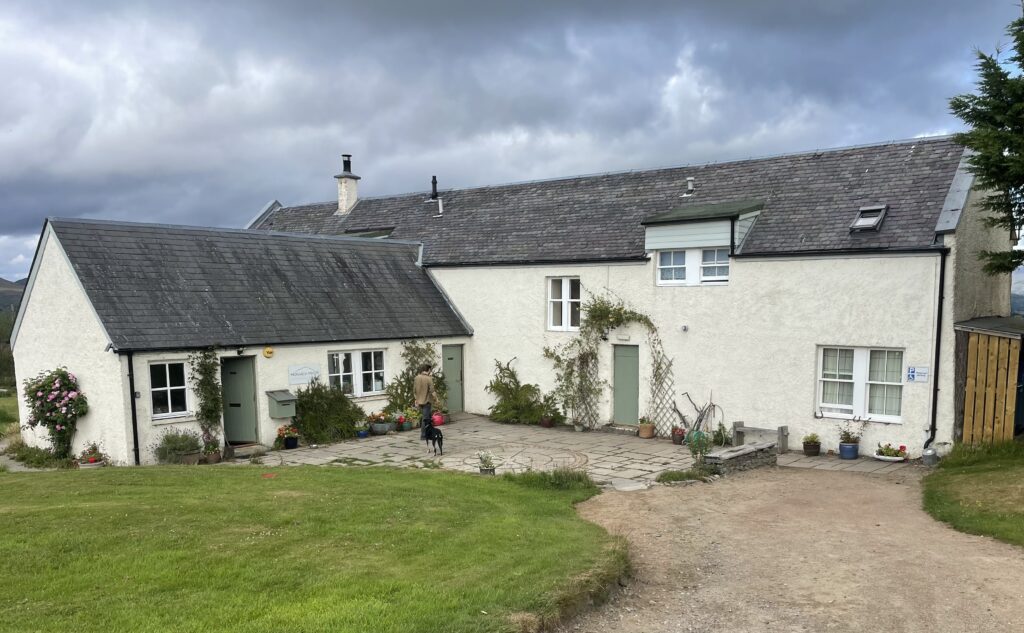
I cannot praise Moniak Mhor highly enough. From the friendly onsite staff to the two experienced visiting tutors and the stunning scenery to the thirteen fellow students, it was a wonderfully immersive experience. The days started with a help-your-self breakfast, followed by a three-hour tutored session. Afternoons were free to write, read, but we also had two 30-minute sessions with each of the tutors. Our evenings included readings from tutors, a guest author, and from students. The social side included each of us (in groups of three) preparing and cooking the evening meal. Moniack Mhor is well worth considering for your writing career – if you plan to be in Scotland.
Stirling
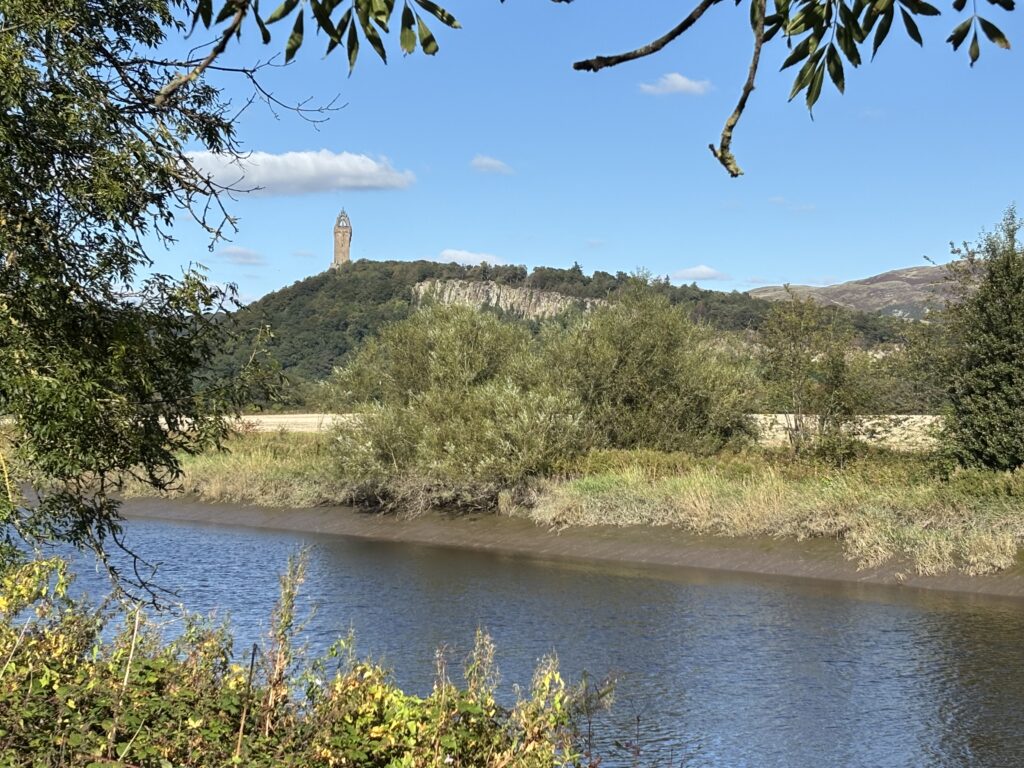
I’ve now lived in my new adoptive city of Stirling for three months now. It is about ten miles from my hometown of Falkirk, but interestingly, just a few miles from my birthplace of Bridge of Allan. Stirling is an ancient city, with a stunning castle that dominates the skyline. It was the home of the Stewart kings and a fascinating place to visit. I live in a neighbourhood called Riverside. Very apt as the windows of my apartment looks directly out onto the River Forth. Not quite up to the views I had in Halifax or Vancouver, but still, it’s a water view that somehow resonates with my Cancerian birth sign.
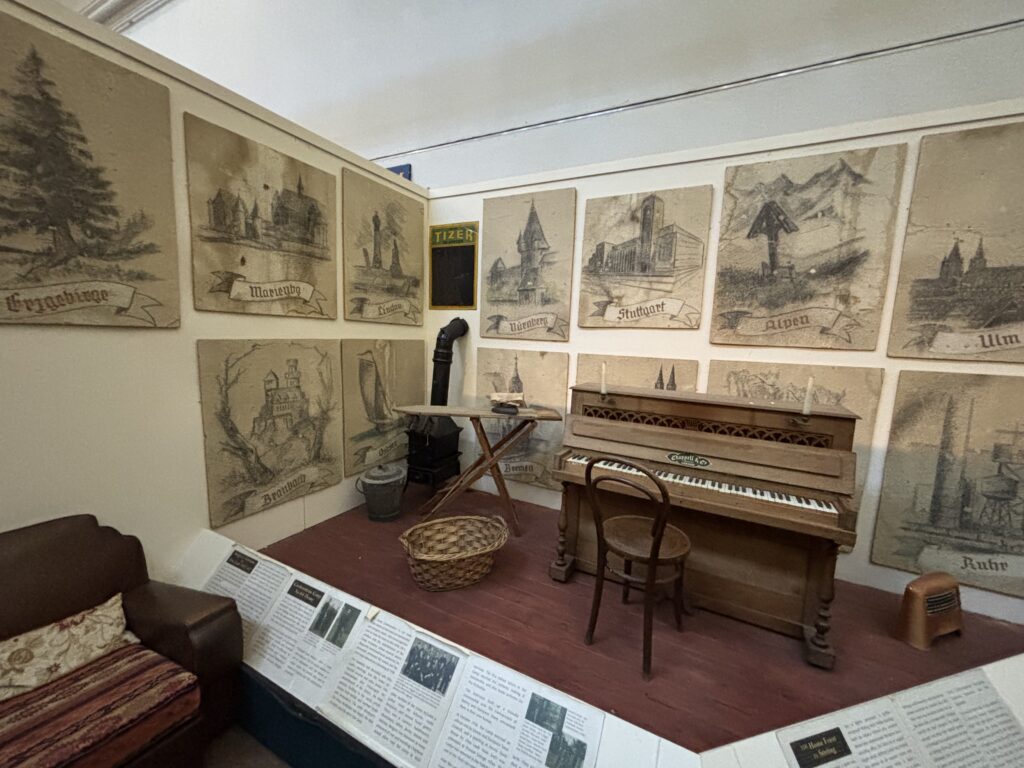
Meeting new people is important in any relocation. I’ve joined the local branch of Toastmasters International, attended my first book reading, found a local choir. Stirling is the home of the Smith Art Gallery and Museum. I had heard they had an exhibition related to my book, so I had to find out more. One of the POWs of the real-life Camp 64 painted a series of murals and seeing them in the museum was a very tangible link back to my fictional characters. A piano also features in my story, and seeing this old piano there, naturally caused me to find out more about it.
Festivals and Dunkeld
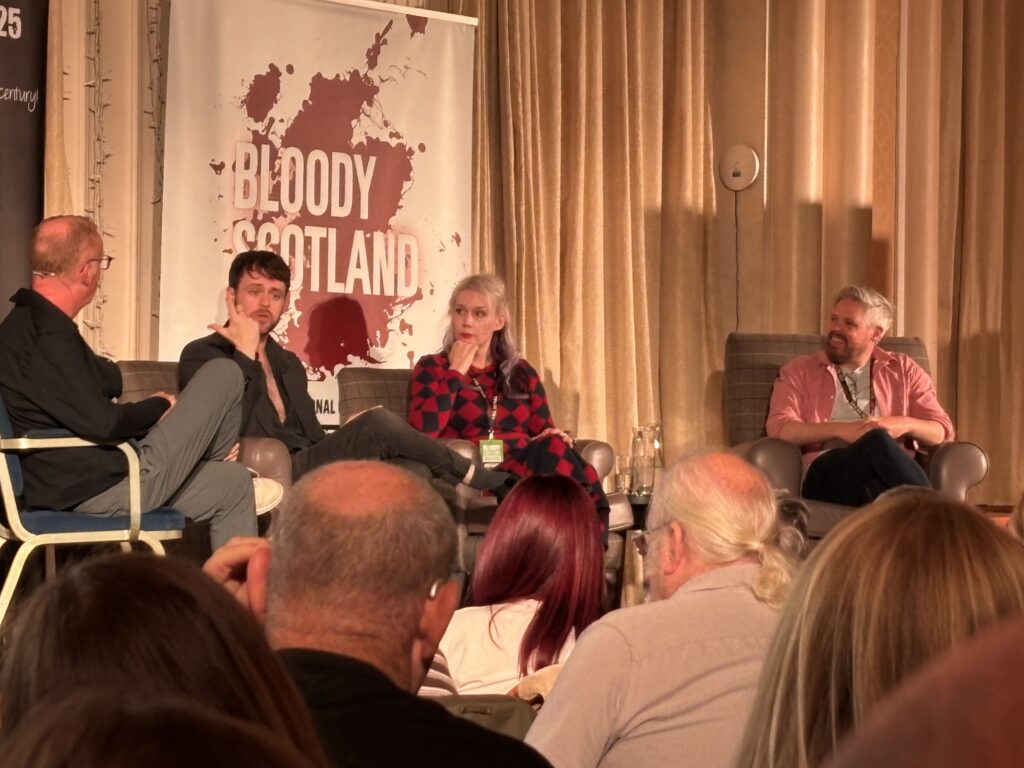
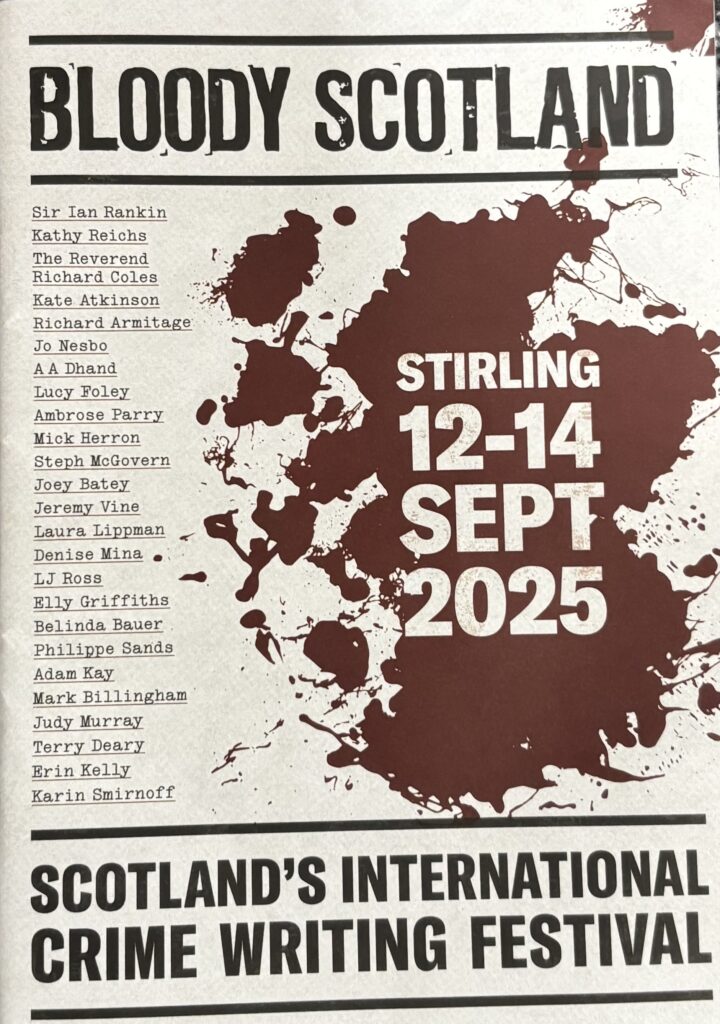
Earlier this month, Stirling played host to the annual crime writers festival, Bloody Scotland. I attended three events, and I loved the whole experience of being among a friendly community of writers and readers. I also took advantage of my proximity to Edinburgh and spent two days seeing a couple of events at the world-famous Edinburgh Festival.
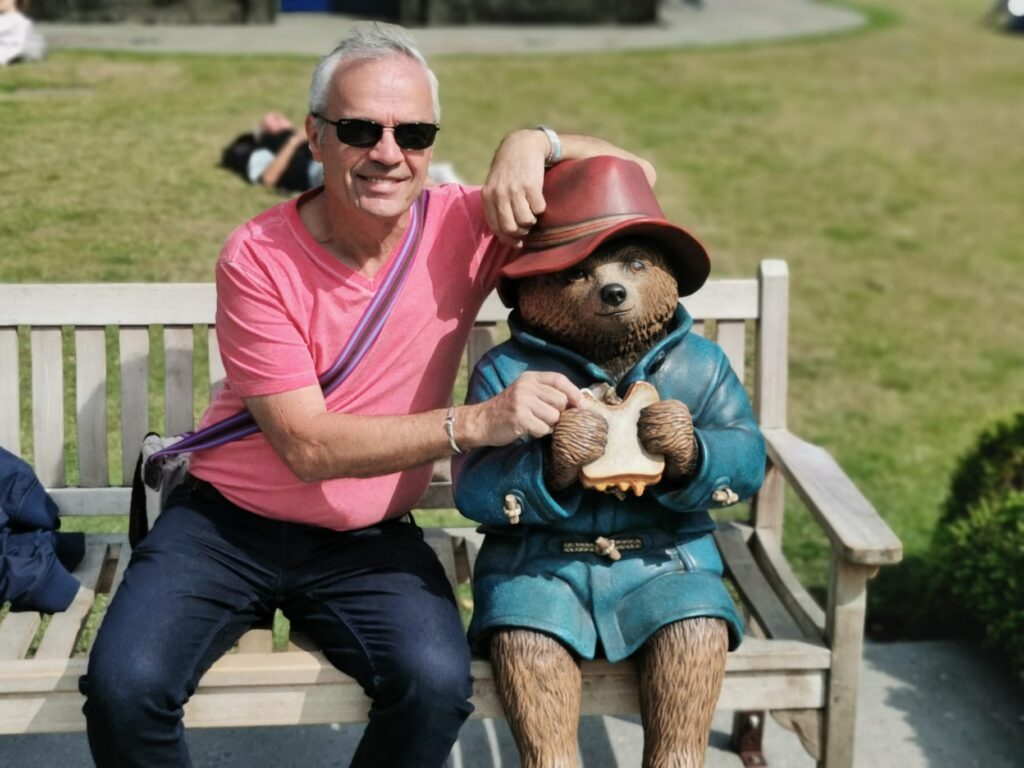
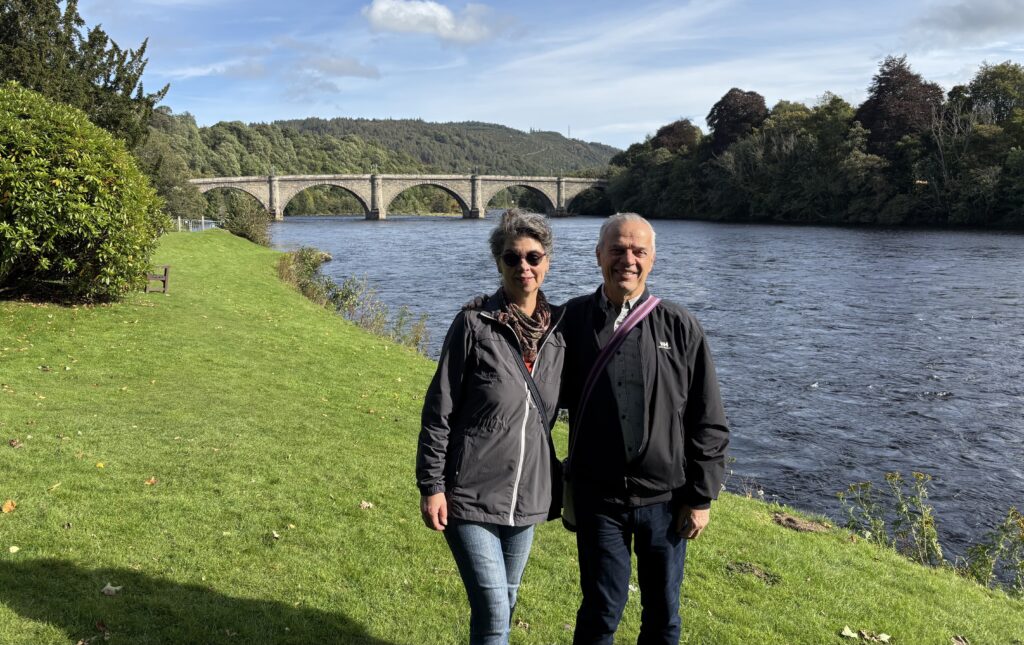
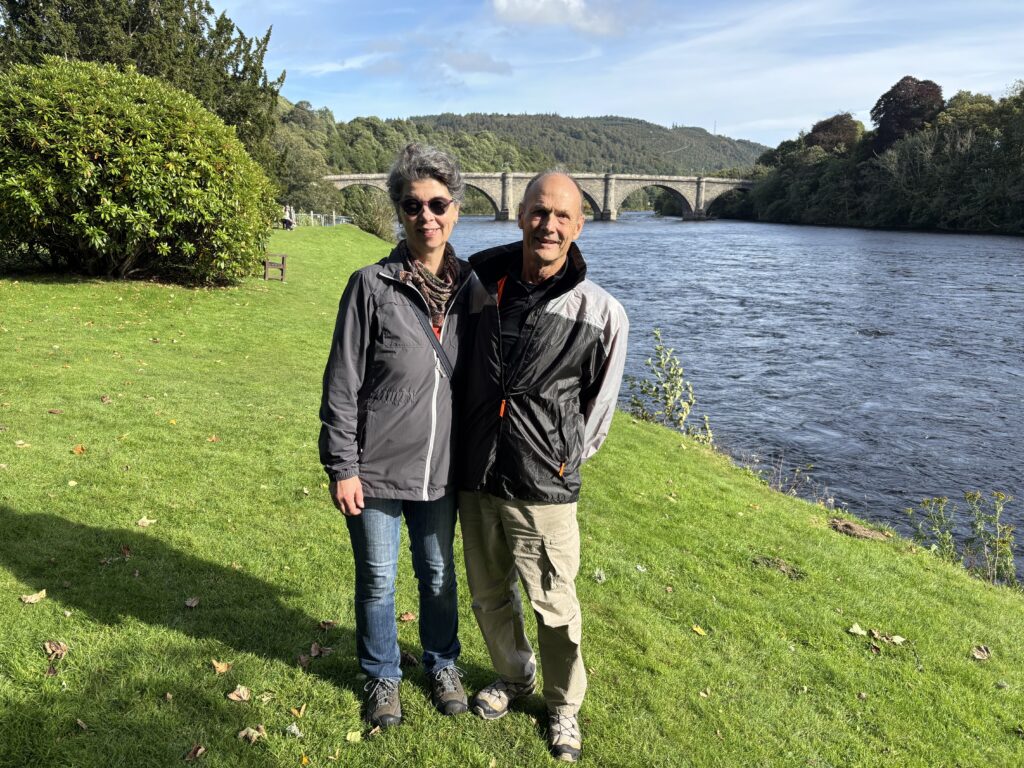
It was with great pleasure that I met up with fellow MFA graduate, Sheila Firth. She spent a week in Scotland with her new husband, Peter, on their honeymoon. We spent a delightful day in the ancient town of Dunkeld.
Stories and Scribbles
In this transitional phase of living in a place with no furniture or WiFi, I’ve spent a great deal of time reading. I’ve discovered a lovely coffee shop/bookstore in Stirling called The Book Nook. There I’ve discovered a local author, Liam Bell, and I’ve just finished reading a second novel of his. An editor’s advice on reading should always be heeded. In this regard, I also read Michael Ondaatje’s The English Patient. I’ve heard of the Oscar-winning film, but reading it, is an exposure to an amazing writer who seamlessly blends present-day narratives with fascinating flashbacks.
Being an aspiring author, I am always looking at other trails to follow for a second book. I believe I have found one. It is a story that, as a former mariner and Nova Scotian, has been swirling around in my head for the past few years. The SS Atlantic, is a ship that crashed into the rocks near Halifax one hundred and fifty years ago, with a large loss of life. I’m fascinated that this ship was from the same shipping company and built in the same shipyard as the Titanic, but forty years earlier. More to come on this in subsequent blogs.
Curmudgeon Chronicles
Those who knew me in Vancouver and Halifax, would have heard me complain about Canadian bureaucracy. It was big surprise then, when relocating to Scotland, finding out British bureaucracy is every bit as bad. Trying to navigate my way through a minefield of robotic shop assistants and uncompromising help-desk personnel became a demoralising experience. I don’t think it was like this when I left thirty years ago. I’m sure then there was more flexibility instead of rigid protocols. Alas, it seems that common sense is now an alien concept to most organisations.
On the lighter side, I’ve discovered since coming back to Scotland, I don’t need a car. This emulates my five years in Vancouver. Being a senior in Scotland has its advantages: a bus pass allowing free travel; a senior railcard giving a generous discount on trains; and a good network of bike lanes in Stirling. How I’ll survive biking and walking in a Scottish winter remains to be seen. But I’m optimistic, after all I did survive seven winters in Nova Scotia!
After thirty-two years living in the USA and Canada, another aspect of adjusting to live in Scotland is the restaurants and bars. I like the no tipping practice, but, ironically, it often comes at the cost of service. I never thought I’d wish to hear these words again: “How were the first bites?”
And finally, I promise my next blog will not be so long in coming to you!