
In writing historical fiction, a huge amount of research is required. This research took me from the beaches of Normandy to Berlin and from the Imperial War Museum in London to the preserved POW Camp at Cultybraggan in Scotland. In Germany, I took a side trip to Munich and visited Dachau Concentration Camp. And, closer to home, I learned so much from the good people at the Falkirk Local History Society
The opening scene of the novel is Sword Beach in Normandy, France. I knew I couldn’t be authentic about my story if I didn’t visit there. So, on a July morning in 2023, I sat on the beach and tried to imagine the scene unfolding before me as it was back on June 6, 1944. And, as luck would have it, it was dull and overcast – as it was on D-Day!
Much of the background on POWs – how they were treated and the camps themselves – was based on the writings of Lieutenant-Colonel Henry Faulk. His is a fascinating story in itself. Born to a poor Scottish farming family, he obtained a first-class honours degree in modern languages from Glasgow University and, at the start of the war, joined the army. As part of the Foreign Office’s POW Division, he became responsible for the re-education program for POWs. His book, Group Captives, is a comprehensive study of his work in this field. I also spent two days in London’s Imperial War Museum reviewing the private papers of Colonel Faulk.
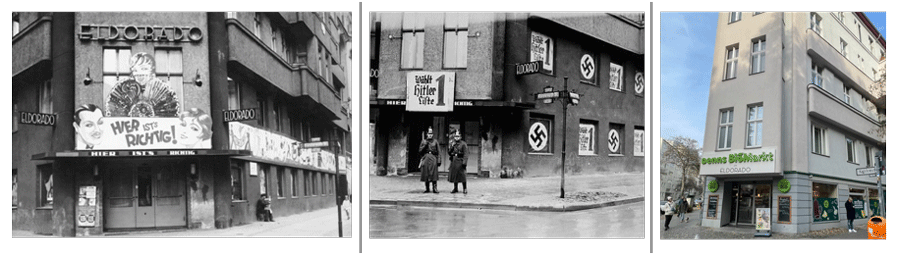
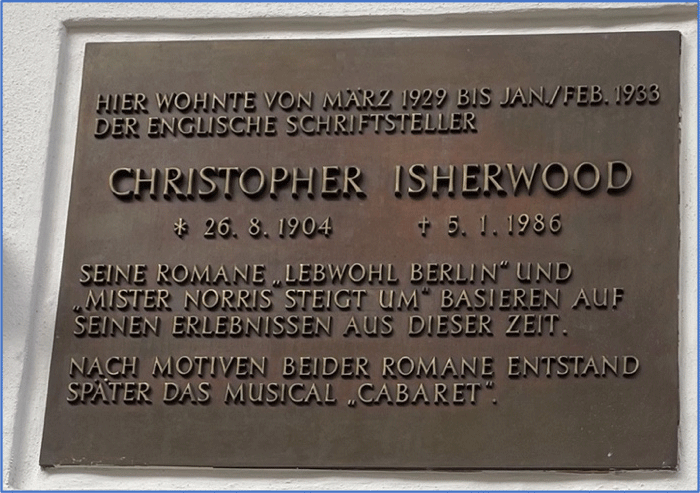
Inspired by the Swing Kids movie, and wanting to find out more about 1930s Berlin, I spent three days in there in 2024. Karl’s neighbourhood was Schöneberg. This was the centre of Berlin’s vibrant club scene in the 1930s. This was the home of English author, Christopher Isherwood, whose Berlin novels was the basis for the highly successful musical and film, Cabaret. The Eldorado was probably one of the most famous clubs in Berlin and was popular with the gay community. Karl would likely have visited this with his friends. The photographs show, L-R, the Eldorado in its heyday, under Nazi control, and in 2024.
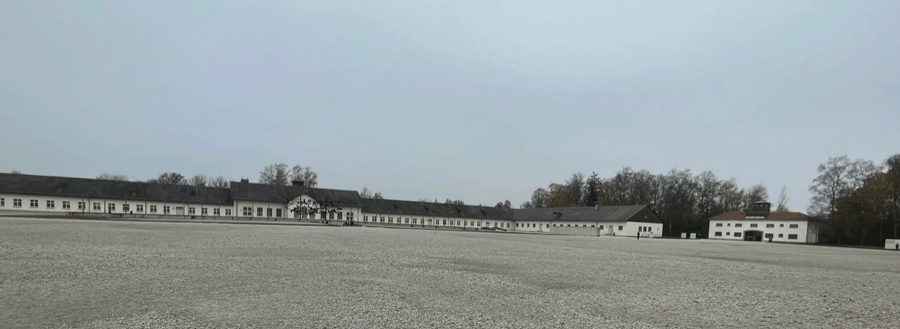
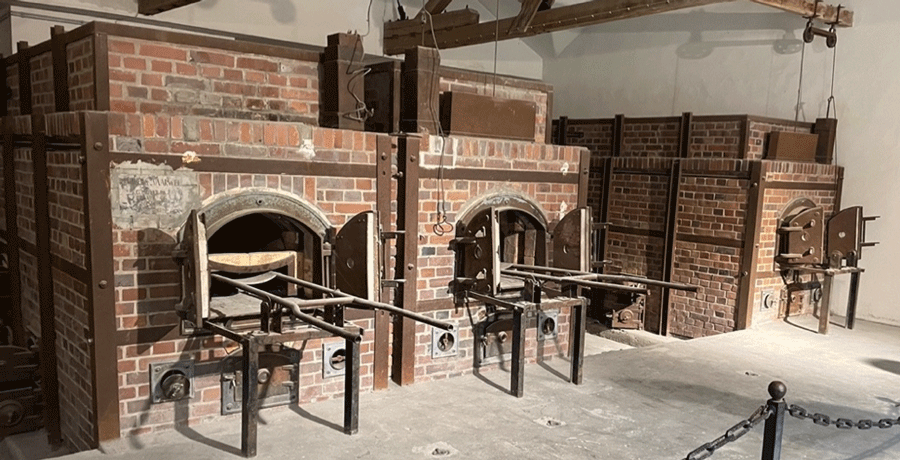
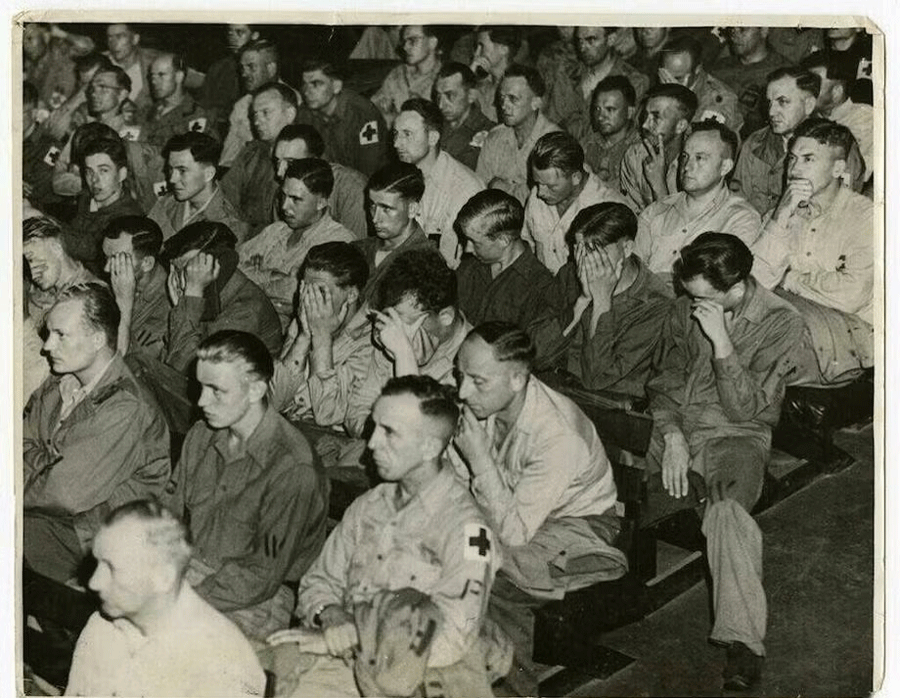
A dramatic scene in my novel is when all the POWs were shown the film made by the US Army when they liberated the death camps – see my earlier newsletter. It was important for me to visit Dachau and get a sense of the scale of this mass extermination process. My first impression was the vastness of the space – it was the size of an aircraft manufacturing facility. As with many of the Nazi operations, it was done with careful planning and with industrial efficiency. Standing inside the gas chamber and seeing the false shower heads, I tried to imagine the sense of the terror going on in the minds of the naked masses huddled there when the metal door slammed shut and the poisonous gas was injected.
The revelation of these camps and seeing, for the first time, gas chambers, crematoria and skeletal corpses must have shocked the POWs to their core.
During the war, there were about five hundred POW camps in the UK. Today, only two have been preserved as museums, these are Eden Camp in Yorkshire and Cultybraggan Camp in Scotland. I’ve visited Cultybraggan twice, and this gave me great insight into camp life for POWs.
***
I have devoted these first three newsletters to my novel and some of the research that went into it. In the May issue, I expand the content to give more information about myself and how my life changed when I finally decided that becoming a writer was something I could do, even at my advanced age!