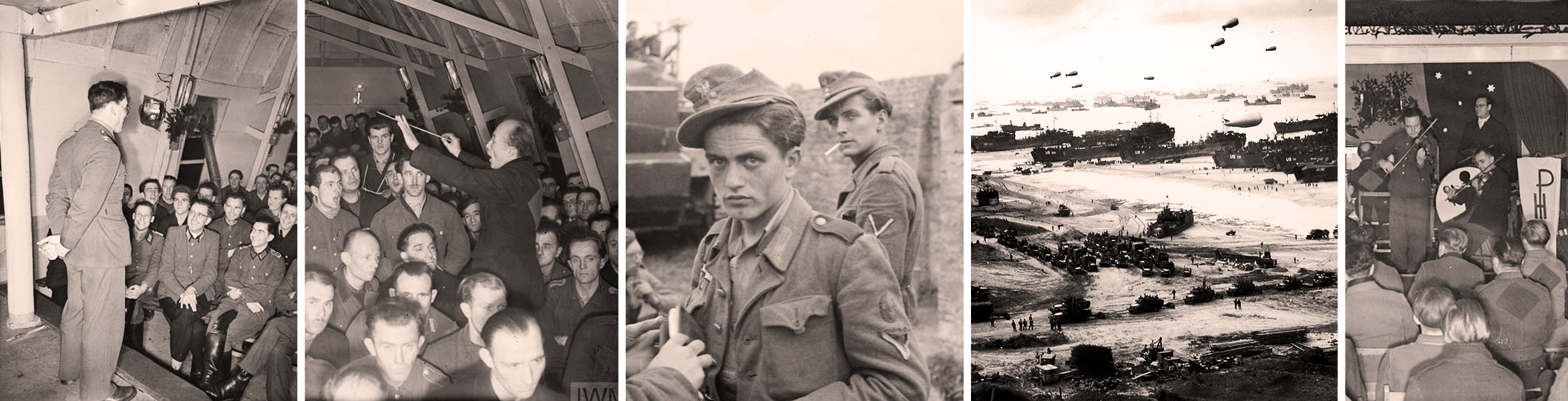
Photos courtesy of the Imperial War Museum
Manuscript In Progress
Camp 64 (working title) is based on an actual Scottish prisoner of war camp and inspired by a real-life German POW who worked on our family farm (shown here in the background). The fictitious POW takes us on a journey from the Normandy beaches to Scotland. It focuses on his interaction with a farming family battling their own demons. It’s the story of an unexpected and passionate friendship between the POW and the farmer’s son. This fictional narrative explores themes of resilience, empathy, acceptance and the power of choral music to heal in the aftermath of the discovery of the full horrors of the Nazis.
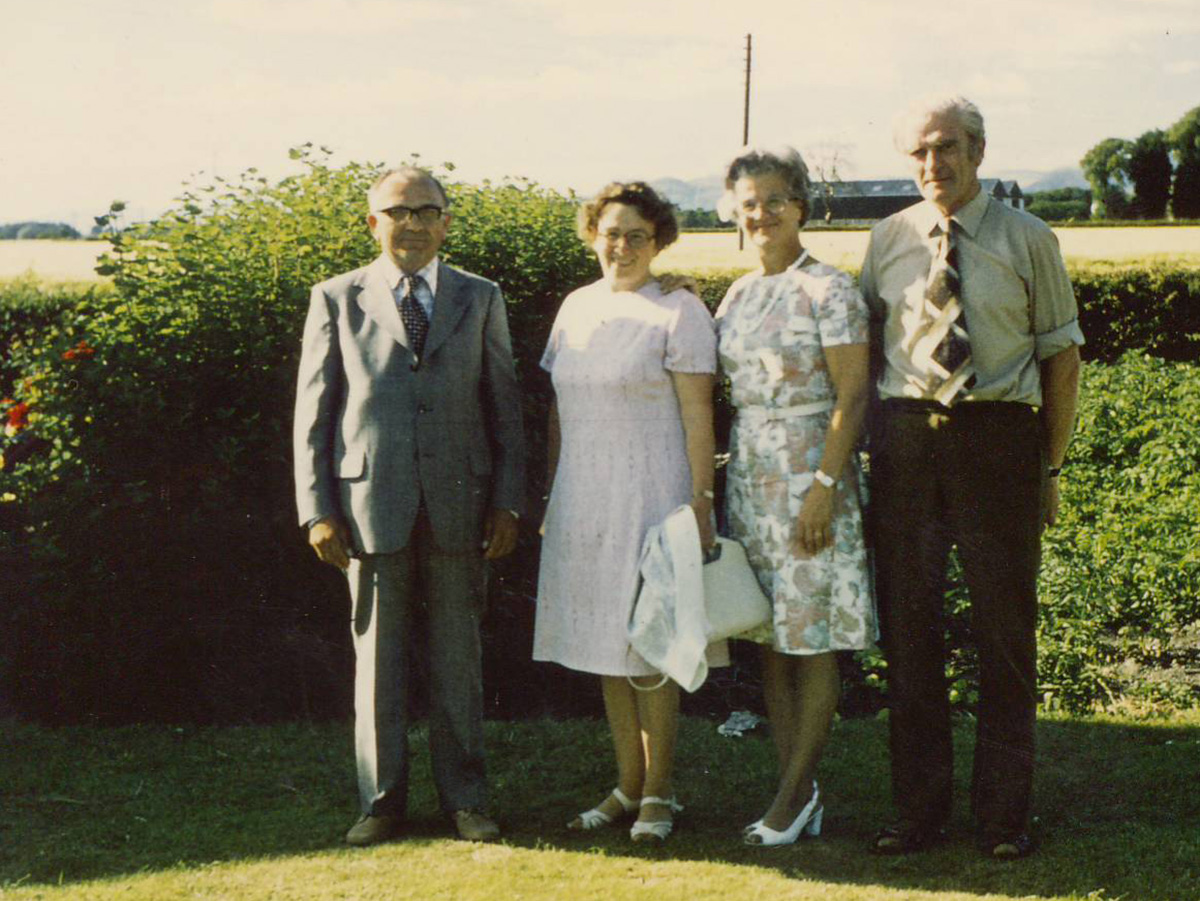
Left to right: Wilfrid Kremp, Frau Kremp, Margaret and Tom Millar (author’s parents). Taken 1980 in Falkirk, Scotland.
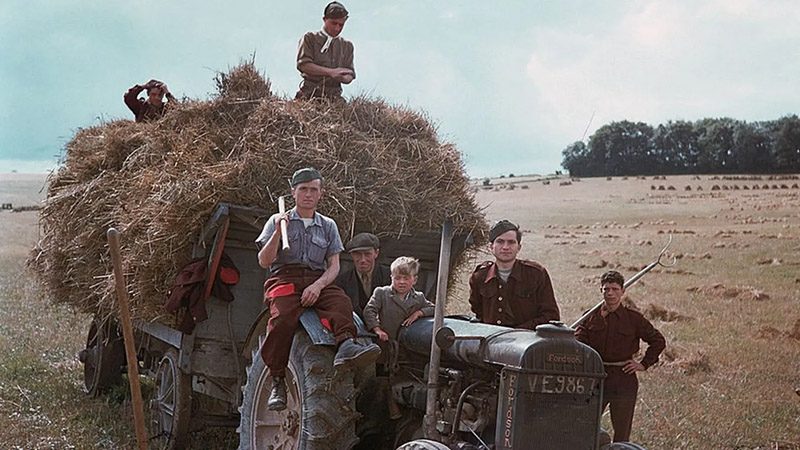
Hulton Deutsch/Corbis Historical Collection via Getty Images.
The Protagonist
Wilfrid Kremp was a German prisoner of war and was interned at Castle Rankine POW Camp during and after WW2. After the war, German POWs remained in the UK for up to three years. Germany, at the time, was in ruins and not ready to accept such a large number of returning soldiers. Britain also had an acute labour shortage and many POWs worked in agriculture. Wilfrid worked for a number of years at Westerglen Farm for William Millar, the farmer (my grandfather). He was the same age as my father and they became friends. We were told stories of Wilfrid and my father fixing up old motorbikes and riding them around the farm. Around 1950, Wilfrid returned to Germany. We received a Christmas card each year from him. Around 1980, Wilfrid came back to visit Scotland, to see the old camp and for a reunion with his old friend, Tom Millar (my father).
Wilfrid is the inspiration for the main character in my novel, but bears no resemblance to the real person. Castle Rankine is the basis for the fictional Greendykes POW Camp and Westerglen is the inspiration for Larkfield Farm.
Published Works